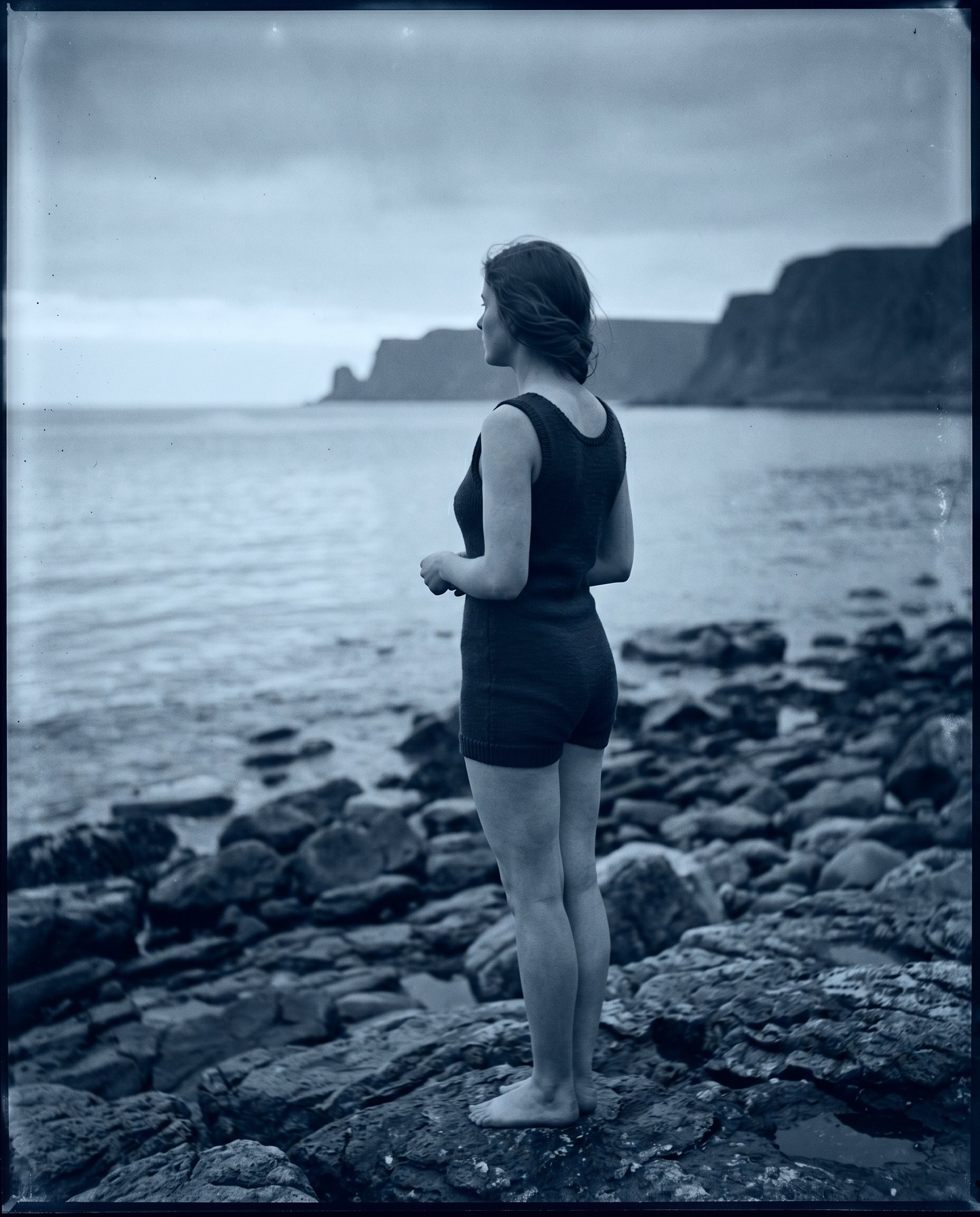
Cap Gris-Nez · the starting point of the historic swim
100 Years of the Channel · Centennial

What remains
when the applause
fades?
A foundation for
movement, dignity,
and new paths.

A hundred years later, a foundation begins that carries her question forward.

Until the start · Cap Gris-Nez · 6 August 2026 · 07:05
--- DAYS --- HRS --- MIN --- SEC

Centennial buildup · day-precise approach to the swim start on 6 August 1926.

06 · 08 · 1926 · 07:05
Cap Gris-Nez
06 · 08 · 1926 · 21:36
Kingsdown
12 · 08 · 1926
Stuttgart Hbf
12 · 08 · 1926
Bissingen
27 · 08 · 1926
New York
Core Field of Impact

Life beyond the peak.

High-performance biographies end — through career closure, injury, identity rupture, or the loss of structure, data, and narrative authority. This is exactly where the Trudy Ederle Foundation works: in the precarious post-performance phase, where stability, dignity, and the next identity must be re-anchored.

For this we are building T-R-U-D-Y — an institutional protective architecture of five principles: controlled transition, recovery as basic care, the inviolability of boundaries, documented truth instead of myth, and the right to a next identity.

T-R-U-D-Y is the strategic impact architecture of the foundation. From it, concrete tools will emerge step by step — from transition plans to data standards. They are reviewed, developed, and communicated as real only once they are.
T
Transition

The controlled transition out of the active phase.

R
Recovery

Recovery as basic care, not as a luxury.

U
Untouchable Rights

Physical, mental, private, and data boundaries as rights no one may override.

D
Documented Truth

Evidence before myth — sources, evidence chains, factual fidelity.

Y
Your Next Identity

Lead time for the next identity, before the previous one collapses.

Core field of impact · Under development · Strategic architecture

What remains when the applause has faded? A foundation for movement, dignity, and new paths.

Our work is in development. We are building a clear grant logic, credible partnerships and programs designed not merely for attention, but for lasting impact.

The Trudy Ederle Foundation translates elite-sport expertise into societal health capital. We connect a historically singular legacy with a present-day societal task: putting people in motion, strengthening prevention and enabling participation.

Our conviction: prevention does not begin in hospitals. It begins in daily life — in movement, community, confidence and structures that reach people early.

What we do not claim. We do not claim nationwide programs, system-wide school or club rollouts, or verified impact figures unless they have been confirmed. Status accuracy is part of our governance.

Period figure on the Channel coast at dawn
Cap Gris-Nez · France · Dawn
Trudy Story · 06.08.1926

Many believed it was impossible. Trudy swam anyway.

In the early morning of August 6, 1926, Gertrude "Trudy" Ederle stepped into the English Channel at Cap Gris-Nez. She was twenty years old, had already won three Olympic medals — and now she was swimming toward a coast that only five men had ever reached.

Fourteen hours and thirty-one minutes later, she reached Kingsdown. She had broken the men's record by nearly two hours. She was the first woman to swim the Channel. And she changed what was considered possible — not just in the water, but everywhere.

Trudy died in 2003 at the age of 98. Her story is not only a triumph; it is also a story of endurance, vulnerability, hearing loss and the ability to strengthen others. This is where the Foundation begins.

35
Miles
Distance
14:34
Hours
Swim time
98
Years lived
1905 – 2003
Read the full story →
"We carry forward what she stands for: courage, movement, self-confidence — the strength to make others strong."
— Foundation guiding principle
The silent pandemic

1 in 4 adults doesn't move enough.

Physical inactivity, lack of prevention and social barriers are among the major, often underestimated health and participation challenges of our time. They rarely arrive suddenly; they accumulate quietly — often where early support is missing.

Why movement is one of the most effective forms of prevention.

The scientific literature associates physical inactivity with increased risks of cardiovascular disease, type 2 diabetes, certain cancers and mental-health strain. Movement is therefore not a lifestyle topic; it is a matter of prevention and participation.

This is why initiatives are needed that make prevention understandable, accessible and partner-ready — with schools, clubs, health actors, sports organisations and funders.

The Trudy Ederle Foundation is developing programs and partnerships for this — step by step, scientifically informed, beginning where movement, confidence and community are shaped early.

Three principles that make Trudy’s legacy useful today.

Our work rests on the principles of her life. These are not slogans but stances — carried by people, tested in the water, transferable to every part of life.

I. Principle

Push limits.

Trudy crossed a boundary others considered immovable. TEF is developing formats in which people can experience courage as something trainable — through movement, guidance, role models and safe learning spaces.

Swimming · Movement · Courage
II. Principle

Never give up.

During her Channel swim, when asked whether she wanted to be taken out of the water, Trudy Ederle answered with two words: “What for?” For the Trudy Ederle Foundation, this documented quote is more than a historic moment. It is a resilience anchor: do not stop simply because others believe the way is too hard. TEF is developing grant approaches for prevention, resilience and a return to movement.

Resilience · Recovery · Mental Health
III. Principle

Make others strong.

After her career, Trudy taught children with hearing impairments to swim. Strength is meant to be passed on. TEF aims to support coaches, mentors and partners who pass on knowledge, safety and confidence.

Mentoring · Girls' Sports · Coach Training
Young swimmer in a training pool — Trudy Ederle Foundation program
In the water · Today

What begins with movement can change a life.

Our program work is in development. The focus is movement, prevention, inclusion, mentoring and the transfer of experience from sport, health and education into concrete grant and partner formats.

We are working step by step with partners, funders and experts on pilot formats. We measure success not by medals, but by access, confidence, participation and sustainable habits.

Request a partner conversation
Portfolio architecture

Six program lines —
one impact architecture.

Six working titles, six fields of effect. Each line is carried as a strategic program line of the foundation in build-up — rooted in the legacy of Trudy Ederle and marked with a clear status.

Status discipline

These program lines describe the Foundation's strategic impact architecture — not completed outcomes. They are working titles under development, in preparation, or in conceptual planning. Operational pilot partners and implementation evidence are publicly communicated only once they are real.

Status definitions Under development In preparation Concept / partnership idea "Active / Real" is used only once a program is genuinely operational.
I.

Find Your Water

Field · Health & Movement
Under development

Every person deserves a form of movement that feels like their element. Find Your Water opens an entry into movement framed not by performance, but by rediscovering one's own medium.

Trudy referenceTrudy found her element early and uncompromisingly. Find Your Water carries the idea forward — before discipline can take hold, people need water that holds them.
ProblemSedentary lifestyles and movement formats that exclude many people before the first step.
Target groupAdults and families with elevated movement deficits, low movement biographies or returning to activity.
Pilot formatsLow-threshold movement and water-acclimatisation offerings with municipal and club partners.
Next stepConceptual sharpening, scientific advice, initial partner conversations.
Impact criteriaParticipation retention, access ratio, self-reported movement routine.
Funding logicBuild-up of a scientifically advised movement format under the working title Find Your Water.
View pilot programme
II.

Move Before It Hurts

Field · Prevention & Longevity
In preparation

Prevention as a life practice, not as repair mode. Move Before It Hurts turns the principle of "act before the body signals trouble" into an investable funding logic.

Trudy referenceTrudy moved long before "movement as prevention" was a concept. She made movement a basis of life — not aftercare.
ProblemPrevention is societally under-invested and often activated only after symptoms appear.
Target groupMiddle-aged and older adults, at-risk groups, occupational groups with elevated sedentary load.
Pilot formatsResearch and program collaborations with public-health, sports-medicine and longevity actors.
Next stepMethodological foundations, selection of scientific partners.
Impact criteriaScientific validation, audience reach, replicability.
Funding logicStrategic preparation of preventive program lines under the working title Move Before It Hurts.
III.

Open Water Access

Field · Inclusion & Access
In preparation

Open movement where thresholds are still too high — gender, social position, disability, cultural distance. Open Water Access shifts these thresholds together with others.

Trudy referenceIn 1926 a Channel swimmer was male, well-funded, recognised — Trudy was not. She moved a threshold. Open Water Access moves a different set today.
ProblemStructures for movement are unevenly distributed; whole groups remain excluded.
Target groupPeople with inclusion needs, social disadvantage, movement exclusion or cultural distance from sport.
Pilot formatsLow-threshold access formats with local providers, social partners and inclusion organisations.
Next stepNeeds analysis, selection of strategic inclusion partners.
Impact criteriaReach, quality of participation, anchoring with providers.
Funding logicPilot concepts and access formats under the working title Open Water Access.
IV.

Second Channel

Field · Athlete Transition
Under development

Career as the first channel, life work as the second. Second Channel accompanies elite athletes on the transition after the peak — structured, confidential, with knowledge transfer into society.

Trudy referenceAfter 1926 Trudy faced a second crossing: the life after the record. She later taught deaf children to swim — knowledge was passed on, not archived.
ProblemCareer transitions are rarely accompanied structurally; experiential knowledge from elite sport is regularly lost.
Target groupActive and former elite athletes, coaches in transition.
Pilot formatsMentoring tandems, transition curricula, knowledge-transfer modules.
Next stepCurriculum and mentoring architecture.
Impact criteriaStable transitions, documented knowledge transfer, retention quality.
Funding logicBuild-up of a transition framework under the working title Second Channel.
V.

The What For Circles

Field · Purpose & Community
In preparation

Taking community and purpose seriously as health factors. The What For Circles translate Trudy's question into conversation and community formats for people who need to rediscover what they get up for.

Trudy reference"What for?" — Trudy's calm defiance in the Channel. The What For Circles give the question a held space: movement begins with a why.
ProblemCommunity, purpose and belonging are frequently underestimated in health and movement work.
Target groupCommunities, initiatives, local providers and people in life transitions.
Pilot formatsLocal encounter and movement circles, mentoring groups, purpose workshops with civic partners.
Next stepConceptual outlines, dialogue with civic partners.
Impact criteriaRetention, diversity of providers, transferability across locations.
Funding logicResearch and pilot approaches under the working title The What For Circles.
VI.

The Trudy Ederle Learning Archive

Field · Legacy & Education
Under development

Knowledge that is passed on, not just remembered. The Learning Archive translates Trudy Ederle's story into educational and commemorative formats — dignified, modern, precise.

Trudy referenceAfter her career, Trudy taught deaf children to swim — knowledge did not stop with her; it was passed on. The Archive anchors that principle institutionally.
ProblemTrudy's story is rarely activated for education, transmission and remembrance.
Target groupSchools, cultural partners, young people, historically interested public.
Pilot formatsSchool materials, commemorative formats, exhibition and culture partnerships.
Next stepFormat development in education and remembrance, source and curatorial standards.
Impact criteriaReach, didactic quality, depth of cultural partnerships.
Funding logicEducational and commemorative formats under the working title The Trudy Ederle Learning Archive.

Note on status truth

TEF presents programs, partnerships and impact as real only when they are. Conceptual brand approaches, partnership ideas and creative campaign ideas are consistently carried as Concept / partnership idea — they are not implemented and represent no existing partnerships, sponsorships or implemented campaigns.

Our roadmap

Step by step — grounded, transparent, accountable.

Our roadmap deliberately distinguishes between active work, work in development, preparation and long-term vision. This keeps clear what is real today — and what is being built responsibly.

Governance & Trust

We are building TEF to withstand scrutiny.

For us, governance is not a certificate but a posture. It shapes every decision — from the use of funds to status communication to the handling of partnerships.

  1. Structural diligence before outward visibility.

    Foundation logic, governance and the use of funds are built before communication. Build-up, program development and impact measurement come before self-presentation.

  2. Truthful status communication.

    Programs, partnerships and impact are presented as real only when they are. Concepts are marked as concepts — visibly, not hidden.

  3. Responsible use of funds.

    Support flows into the build-up of viable program structures, not into media acceleration. Income and expenditure logic is structured and disclosed to major donors and foundation partners.

  4. Due-diligence readiness.

    Major donors, foundation partners and family offices receive comprehensive, structured information on request — to fixed standards, not to mood.

  5. Dignified handling of legacy.

    Trudy Ederle's story is conducted historically accurate, dignified and without sentimentality. Sources are maintained, quotes remain quotes — "What for?" is carried as a documented line by Trudy Ederle and used as a resilience anchor.

Get involved

We're looking for people willing to get in the water.

A foundation lives from trust, clarity and people willing to take responsibility. Three ways to engage — depending on role, network and capacity.

Our foundation correspondence runs on the domain trudyederle.org — deliberately short, so that every email address carries Trudy Ederle's name.

— I —

Fund

As a funder, anchor donor or foundation partner, you help build programs, pilot formats and institutional capacity. Use of funds, status and impact will be documented transparently.

Request a funding conversation →
— II —

Partner

For foundations, companies, clubs, education and health actors that want to develop movement, prevention and inclusion with us — realistically, collaboratively and with clear status.

Explore partnership →
— III —

Share knowledge

Coaches, doctors, sport scientists, mentors and network-builders: if you can contribute knowledge or access, we will develop the right format together.

Get in touch →

How a donor conversation begins.

Structured, confidential, without pressure. Four steps — from first inquiry to an agreed engagement pathway.

01 · Inquiry

Confidential contact

You share background and contact preference — informally, without obligation.

02 · First call

Mutual fit

30-minute conversation on mutual fit. No commitment, no expectation.

03 · Deep-dive

Programs & impact logic

Program lines, status, use of funds and governance — in detail.

04 · Pathway

Contribution & stewardship

Joint definition of contribution, form and stewardship — on equal footing.

Note on partnerships

Among our strategic options are conversations with potential brand and impact partners: conceptual brand approaches, partnership ideas and creative campaign ideas. These ideas are explicitly not implemented and represent no existing partnerships, sponsorships or implemented campaigns.